
Pennsylvania Criminal History Records Search
Pennsylvania criminal history records are maintained by several state agencies and court systems across the Commonwealth. The Pennsylvania State Police serve as the central repository for criminal history information under state law. Court records are available through the Unified Judicial System. You can search and obtain Pennsylvania criminal history records through official state portals, the PATCH system, or by contacting county courts directly. This guide covers every major resource available to the public.
Pennsylvania Criminal History Quick Facts
Pennsylvania Criminal History Records: Where to Start
Two main systems give the public access to Pennsylvania criminal history records. The first is the Pennsylvania Judiciary Web Portal, commonly called the UJS Portal. This free tool lets you search court docket sheets across all levels of the Pennsylvania court system. You can look up case information for appellate courts, Courts of Common Pleas, and Magisterial District Courts. The second is the PATCH system, run by the Pennsylvania State Police, which provides official criminal history reports for a fee.
The UJS Portal gives public access to various aspects of court information, including docket sheets, case calendars, and PAePay for court costs. You can search by case number, participant name, organization name, offense tracking number, police incident number, or state ID number. Finding court case information is easier with the free PAeDocket app, which provides quick and simple searches of court cases. The app is available in the Apple Store and Google Play Store.
Keep in mind that docket sheet information from the UJS Portal should not be used in place of a criminal history report from the Pennsylvania State Police. Court dockets show case history and filings. They do not constitute an official criminal history record under Pennsylvania law.
The official portal for the Commonwealth, pa.gov, connects residents to all state agencies and services. Government websites and email systems use "pennsylvania.gov" or "pa.gov" at the end of the address. This indicates an official state website. Always verify you are on a genuine government site before submitting personal information.
The Administrative Office of Pennsylvania Courts oversees court operations statewide. The AOPC maintains court data and supports all levels of the Pennsylvania judiciary. Their website provides guidance on how to access court records, use online tools, and locate specific case information across the Commonwealth.
The PATCH System for Pennsylvania Criminal History
The Pennsylvania State Police operate the PATCH system (Pennsylvania Access to Criminal History). PATCH is the official method for obtaining a certified criminal history report in Pennsylvania. The fee is $22 per search. Results are returned online and are based on the name you submit. This system is authorized under CHRIA, the Criminal History Record Information Act (18 Pa.C.S. Chapter 91).
CHRIA governs criminal history record dissemination in Pennsylvania. It establishes the Pennsylvania State Police as the central repository for criminal history information. The Act sets out who can access criminal records and for what purposes. Anyone can request their own criminal history through PATCH. Third parties may also request records for certain authorized purposes under state law.
The Pennsylvania State Police website offers additional services related to criminal records. These include information on criminal record and DNA expungement procedures for individuals seeking to clear their records. The PSP also handles Right-to-Know requests for records maintained by the State Police. Contact the PSP directly for questions about specific criminal history records in Pennsylvania.
Note: The PATCH system searches by name only and may not capture all records if a person has used multiple names or aliases in Pennsylvania.
UJS Portal Case Search for Pennsylvania Court Records
The UJS Web Portal is the starting point for most public searches of Pennsylvania court records. The portal provides free access to docket sheets across all three levels of court. You do not need an account or login to use the basic case search. Searches are available around the clock from any device with internet access.
The UJS Case Search tool provides access to court case information including docket sheets for appellate courts, Courts of Common Pleas, and Magisterial District Courts across all 67 Pennsylvania counties. You can search using a party name, case number, or other identifiers. The results show a summary of the case including filed documents, hearing dates, and case status. Recent entries made in the court filing offices may not be immediately reflected on these docket sheets.
The courts of the Unified Judicial System and the Administrative Office of Pennsylvania Courts do not assume liability for inaccurate or delayed data, errors, or omissions on docket sheets. For official documents and copies of filings, you must contact the clerk or Prothonotary at the county where the case was filed. The docket sheet lists documents but those documents cannot be downloaded directly from the portal.
The UJS Portal also offers restricted services for users with a secure login. These include secure docket sheets for all three court levels, statewide warrants, and attorney registration. Members of the Pennsylvania Bar can access PACFile for electronic filing of Supreme Court cases.
The Pennsylvania Supreme Court is the highest court in the Commonwealth. Cases that reach the Supreme Court become part of the public appellate record. Before submitting any filing to the Supreme Court, all procedural requirements must be met. Filings that do not comply with the Rules of Appellate Procedure (Title 210) may be dismissed. Language access services are available for court proceedings, and requests for interpreters should be made at least three days before scheduled events.The UJS Portal is maintained by the Administrative Office of Pennsylvania Courts, which prohibits discrimination against any individual with a disability in accessing or participating in judicial proceedings or services.
How to Search Criminal History Records in Pennsylvania Online
Searching Pennsylvania criminal history records online takes only a few steps. Start by visiting the UJS Portal at ujsportal.pacourts.us/CaseSearch. Enter the person's name and, if known, the county and approximate date range. The system will return matching cases across the court levels you selected. Review the docket sheet for offense details, case status, and court actions.
For an official criminal history report, go to the PATCH system at epatch.pa.gov. Submit the required name information and pay the $22 fee online. Your results will reflect the criminal history record maintained by the Pennsylvania State Police. This is the most reliable method for obtaining a confirmed criminal background in Pennsylvania. The State Police are the central repository under CHRIA, so their records are the most complete available to the public.
The most common way to find information about a specific court case is by using the online case search to view the case docket sheet. A docket sheet is a record of court actions and filings on a case. It provides a summary of case status including the name of the court, presiding judge, documents filed, hearings, and other court activities. PAePay is also available on the portal for paying traffic tickets or court costs online.
Pennsylvania Criminal History and the Right-to-Know Law
Pennsylvania's Right-to-Know Law (Act of Feb. 14, 2008, P.L. 6, No. 3) governs public access to government records in the Commonwealth. Under the law, a record in the possession of a Commonwealth agency or local agency is presumed to be a public record. The presumption does not apply if the record is exempt under Section 708, protected by a privilege, or exempt under another federal or state law.
The Right-to-Know Law provides specific rules for criminal investigative records. Section 708(b)(16) exempts complaints of potential criminal conduct other than private criminal complaints, investigative materials and reports, and records that would reveal the identity of a confidential source or suspect. A record relating to or resulting in a criminal investigation is also exempt if disclosure would reveal the progress or result of a criminal investigation, deprive a person of the right to a fair trial, or endanger the life or physical safety of an individual.
An agency receiving a Right-to-Know request must respond within five business days. If the agency fails to respond within five business days, the written request is deemed denied. The burden of proving that a record is exempt from public access rests on the agency by a preponderance of the evidence.
The Pennsylvania Office of Open Records is the central body that handles appeals under the Right-to-Know Law. The OOR is required to annually report its activities to the Governor and the General Assembly. The OOR also offers mediation as a way to resolve disputes between requesters and agencies without the need for formal appeals. The district attorney of each county designates appeals officers to hear appeals relating to access to criminal investigative records held by local agencies in that county.
Note: Mediation through the Office of Open Records can often resolve disputes faster than a formal appeal in Pennsylvania.
Pennsylvania Criminal History: Department of Corrections Inmate Records
The Pennsylvania Department of Corrections provides an Inmate Locator service for finding individuals currently incarcerated in Pennsylvania state correctional institutions. This is separate from the criminal history record maintained by the State Police. The DOC Inmate Locator shows current incarceration status, not a full offense history.
The Pennsylvania DOC is the largest agency in the Commonwealth, operating correctional facilities and community centers around the clock. Through education and treatment programs, the DOC helps individuals prepare for a successful return to society. The DOC enhances public safety through the housing and rehabilitation of incarcerated individuals in facilities throughout the Commonwealth.
If you want to know whether someone is or was incarcerated in a Pennsylvania state prison, start with the DOC Inmate Locator at the Department of Corrections website. For a full criminal background that includes arrest records, court dispositions, and other offense history, use the PATCH system through the Pennsylvania State Police.
Images: Pennsylvania Criminal History Record Resources
The Pennsylvania Judiciary Web Portal is the official gateway for public access to court case information across the Commonwealth.
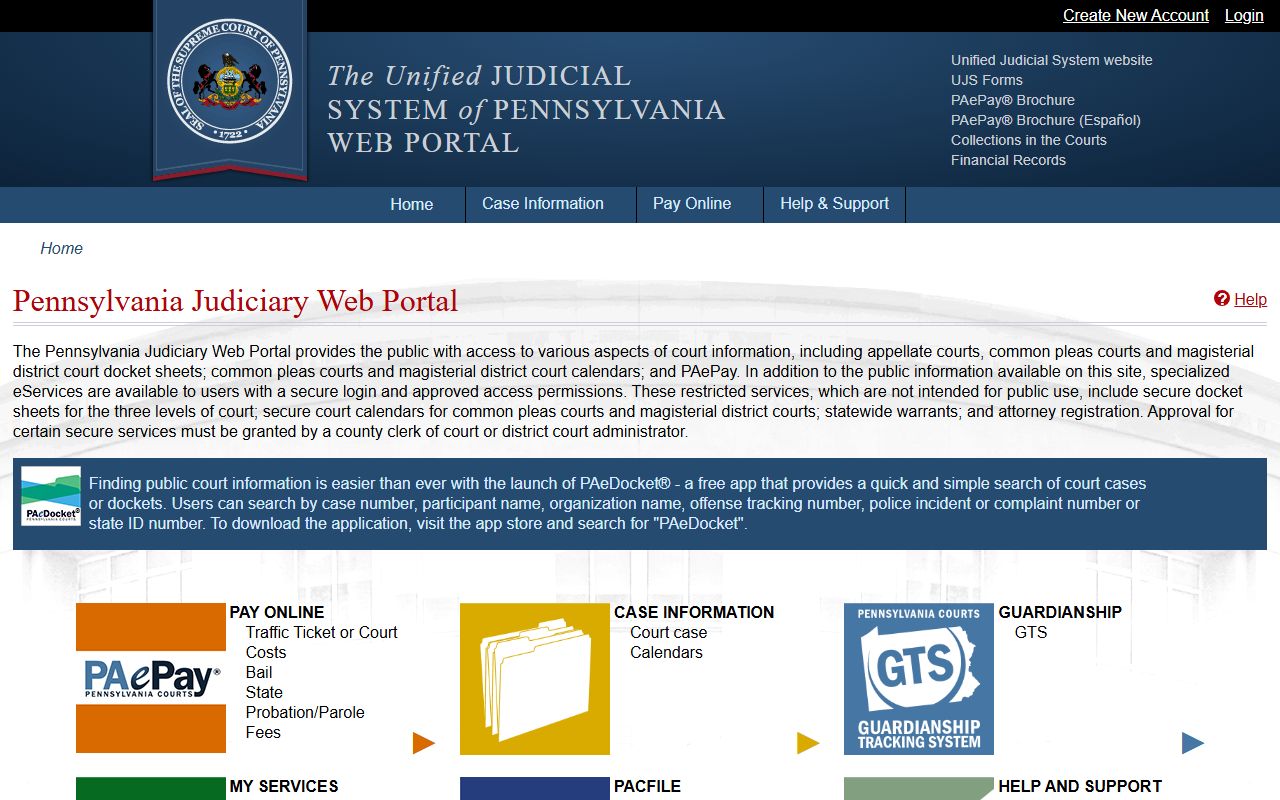
The UJS Portal covers appellate courts, Courts of Common Pleas, and Magisterial District Courts, making it the broadest online tool for searching court-based criminal records in Pennsylvania.
The UJS Case Search page lets you look up individual court cases by name, case number, or other identifiers across all Pennsylvania counties.
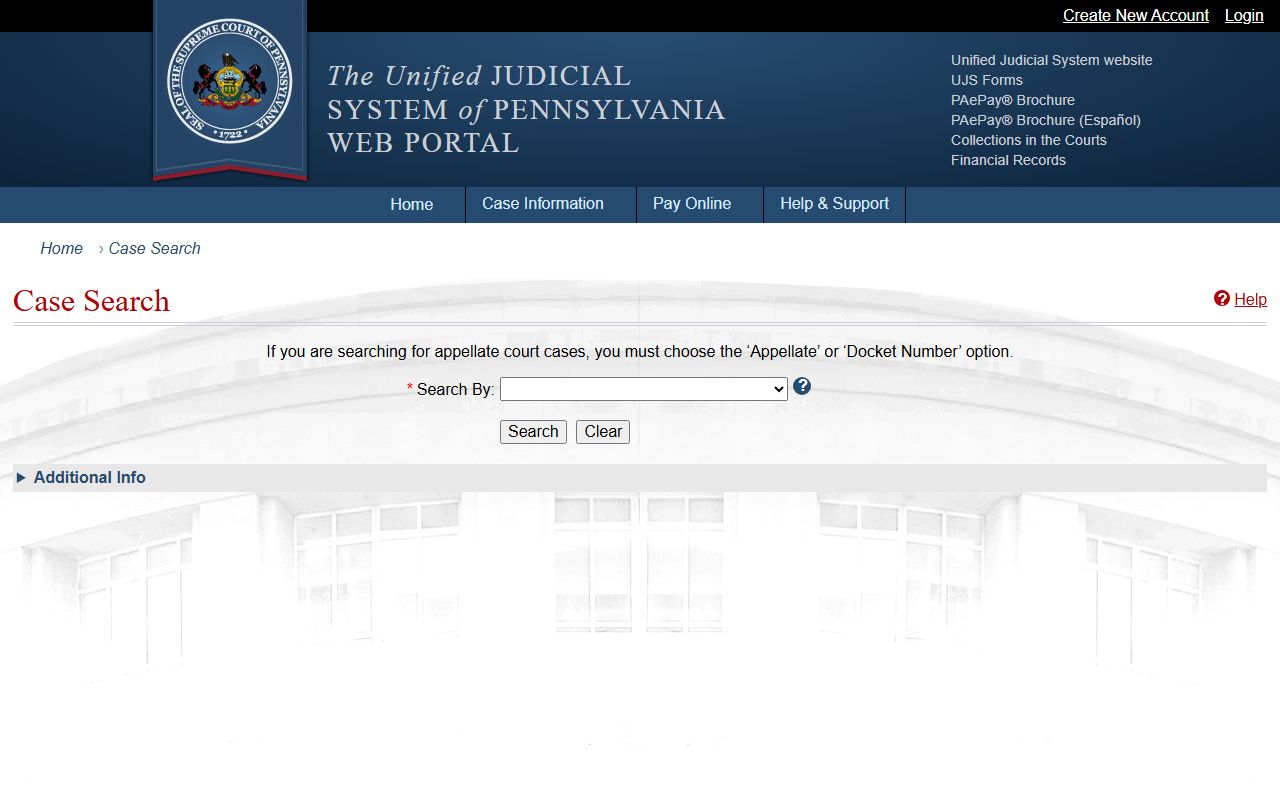
Case search results display docket sheets showing the full timeline of court actions, filings, and case status for criminal matters in Pennsylvania courts.
The Pennsylvania Office of Open Records handles Right-to-Know Law matters and appeals across the Commonwealth.
The OOR's mediation process offers an efficient way to resolve disputes over access to government records, including criminal records, without formal litigation in Pennsylvania.
The full text of the Pennsylvania Right-to-Know Law is available through the state legislature's website for reference.
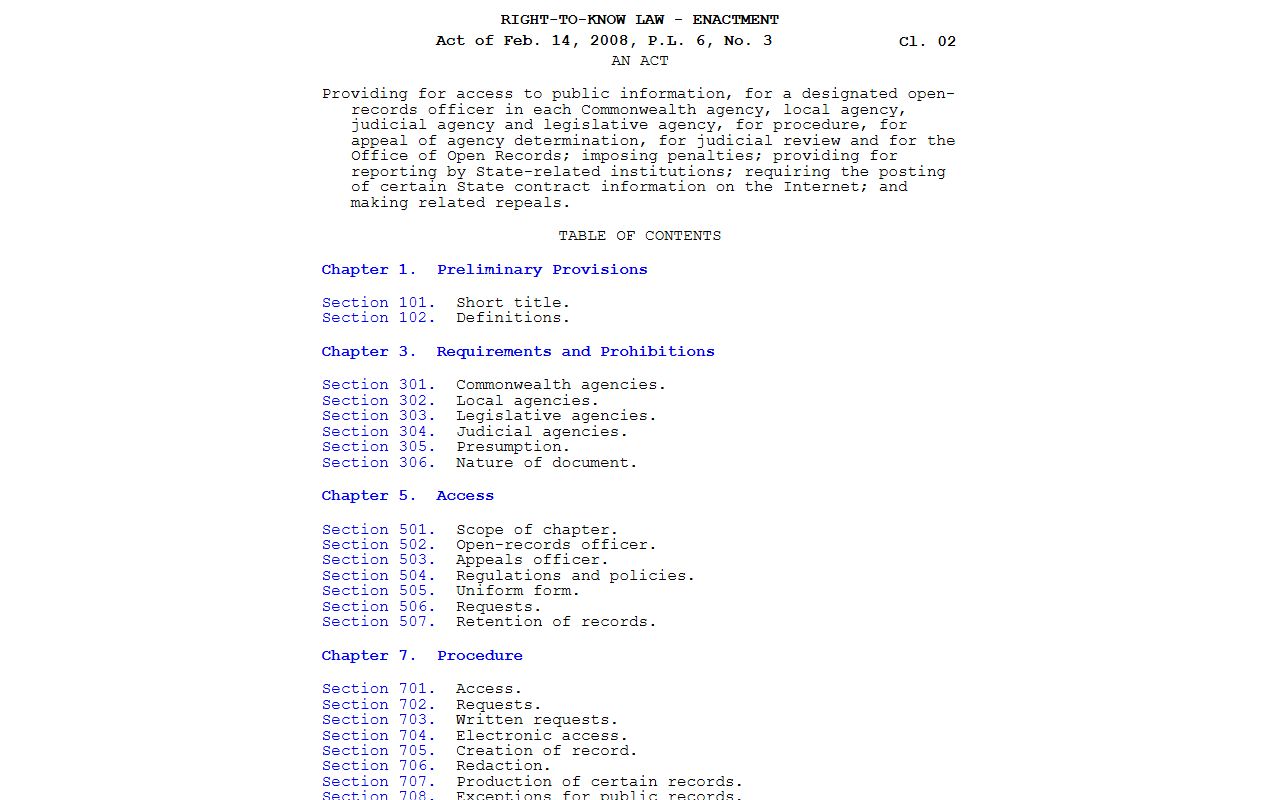
This law establishes the presumption that government records are public and sets the procedures agencies must follow when responding to record requests in Pennsylvania.
The Pennsylvania State Police serve as the central repository for criminal history information under CHRIA.
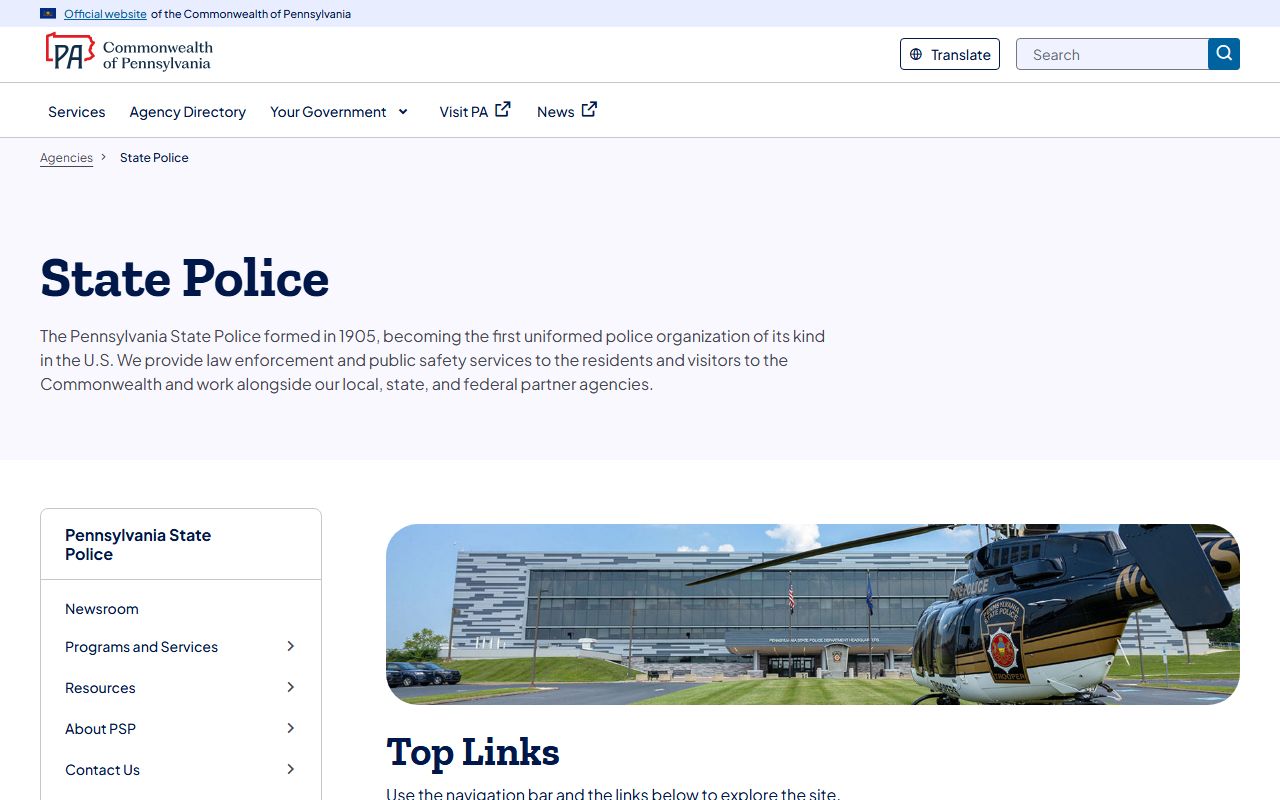
The PSP website provides information on PATCH requests, expungement procedures, and Right-to-Know requests for records held by the State Police.
The Pennsylvania Department of Corrections provides inmate location information for individuals housed in state correctional facilities.
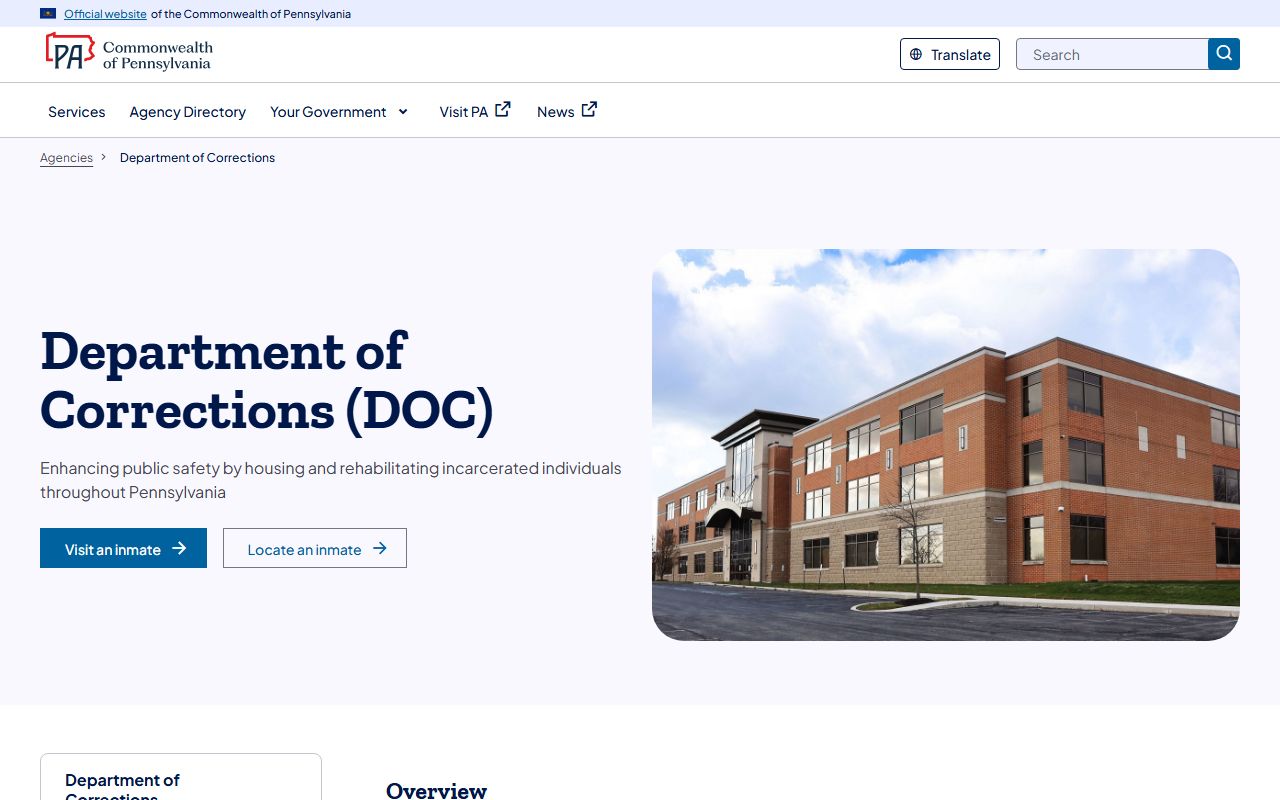
The DOC Inmate Locator is a useful starting point for confirming current incarceration status as part of a broader criminal history search in Pennsylvania.
The Administrative Office of Pennsylvania Courts supports all levels of the judiciary and maintains the UJS Portal infrastructure.
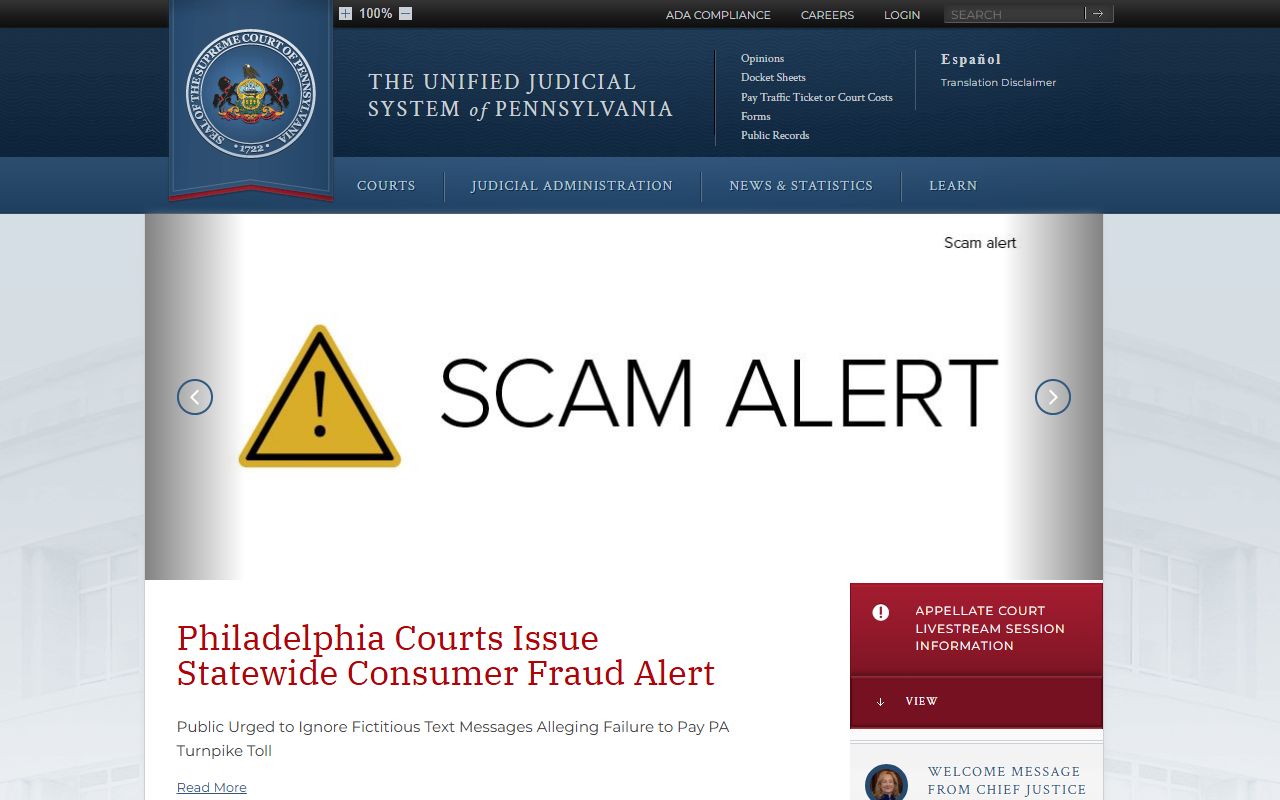
The AOPC website explains how to access court records, use the PAeDocket app, and navigate Pennsylvania's court system for criminal case information.
The official Pennsylvania state portal connects residents to all state agencies, including those that maintain criminal history information.
All official Commonwealth government websites carry a "pa.gov" or "pennsylvania.gov" domain, which distinguishes them from private or unofficial sources of information.
The Pennsylvania Supreme Court is the highest appellate court in the Commonwealth and its records are part of the public court system.
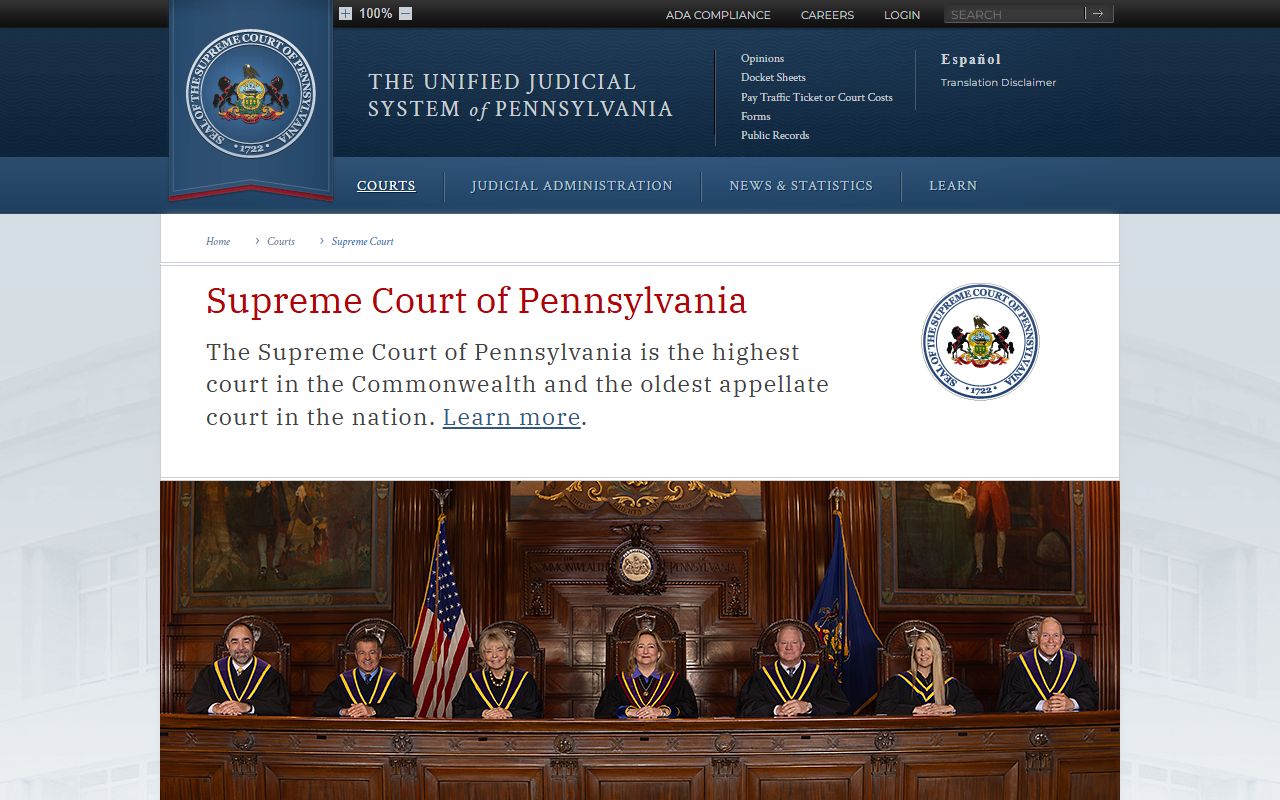
Supreme Court criminal appellate decisions and case filings are accessible through the UJS Portal as part of the broader Pennsylvania court record system.
The PATCH system at epatch.pa.gov is the official Pennsylvania online tool for obtaining a certified criminal history report from the State Police.
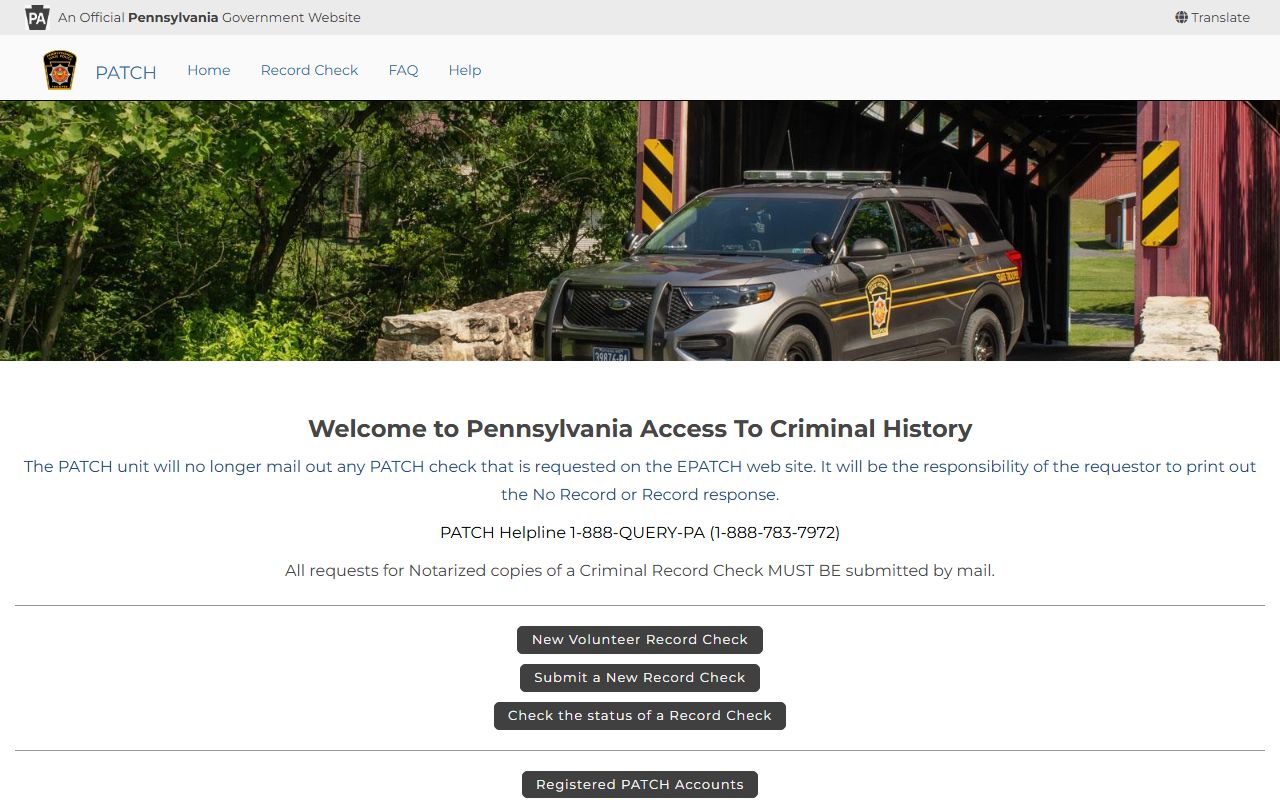
PATCH searches cost $22 per request and return results based on the criminal history record maintained by the Pennsylvania State Police as the state's central repository.
Pennsylvania Criminal History Records: What They Contain
A Pennsylvania criminal history record from the State Police through PATCH typically covers arrests, charges, and court dispositions for offenses reported to the central repository. It may include both misdemeanor and felony matters. The record reflects what has been reported by law enforcement agencies across the Commonwealth to the Pennsylvania State Police.
Court docket sheets from the UJS Portal show a different set of information. They include the name of the court, presiding judge, charges filed, hearing dates, documents filed, and the outcome of each proceeding. Docket sheets do not replace an official criminal history from the State Police but they do provide detailed case-level information that is publicly accessible for free.
Under CHRIA, individuals have the right to review and challenge the accuracy of their own criminal history records in Pennsylvania. If you find an error in your PATCH result, you can contact the Pennsylvania State Police to request a review and correction. Keeping records accurate is important under state law.
- Arrest information reported by law enforcement
- Charges filed in court
- Court dispositions and sentences
- Probation or parole status where applicable
- Expunged records (removed from public view after court order)
The types of records you can access depend on which system you use. PATCH provides the most complete official criminal history for Pennsylvania. The UJS Portal gives free access to court-level offense history across all 67 counties.
Expungement of Criminal History Records in Pennsylvania
Pennsylvania law allows individuals to petition for expungement of criminal history records under certain conditions. When a court grants expungement, the record is removed from public view. The Pennsylvania State Police process expungement orders and update the PATCH system accordingly. The PSP website provides detailed information on criminal record and DNA expungement procedures for those seeking to clear their records.
Expungement eligibility in Pennsylvania depends on factors like the type of offense, the outcome of the case, and the time elapsed since the case closed. Summary offenses may be eligible after a set period without new charges. Arrests that did not result in conviction may also qualify. Each petition is reviewed on its own merits by the court.
Note: Once a record is expunged in Pennsylvania, it will no longer appear in PATCH results or on court docket sheets accessible to the public.
Pennsylvania Criminal Records Across All 67 Counties
Criminal history records in Pennsylvania are filed and stored at both the state level and the county level. Each county's Court of Common Pleas and Magisterial District Courts maintain their own docket records. All of this information feeds into the statewide UJS Portal. You can search any county's court records using the Case Search tool without leaving your home.
Some searches are best done at the county level. The clerk or Prothonotary in each county can provide copies of court documents filed in that jurisdiction. If you need physical copies of criminal filings or want to inspect a full case file, go to the courthouse in the county where the case was heard. Staff can help you locate the record and provide copies for a fee.
Browse Pennsylvania Criminal History Records by County
Each of Pennsylvania's 67 counties has its own Court of Common Pleas and Magisterial District Courts that contribute to the state's criminal history record system. Select a county below to find resources for criminal records in that area.
Criminal History Records in Pennsylvania Cities
Pennsylvania's largest cities generate a significant share of the state's court activity. Select a city below to access criminal history resources and court information for that area.